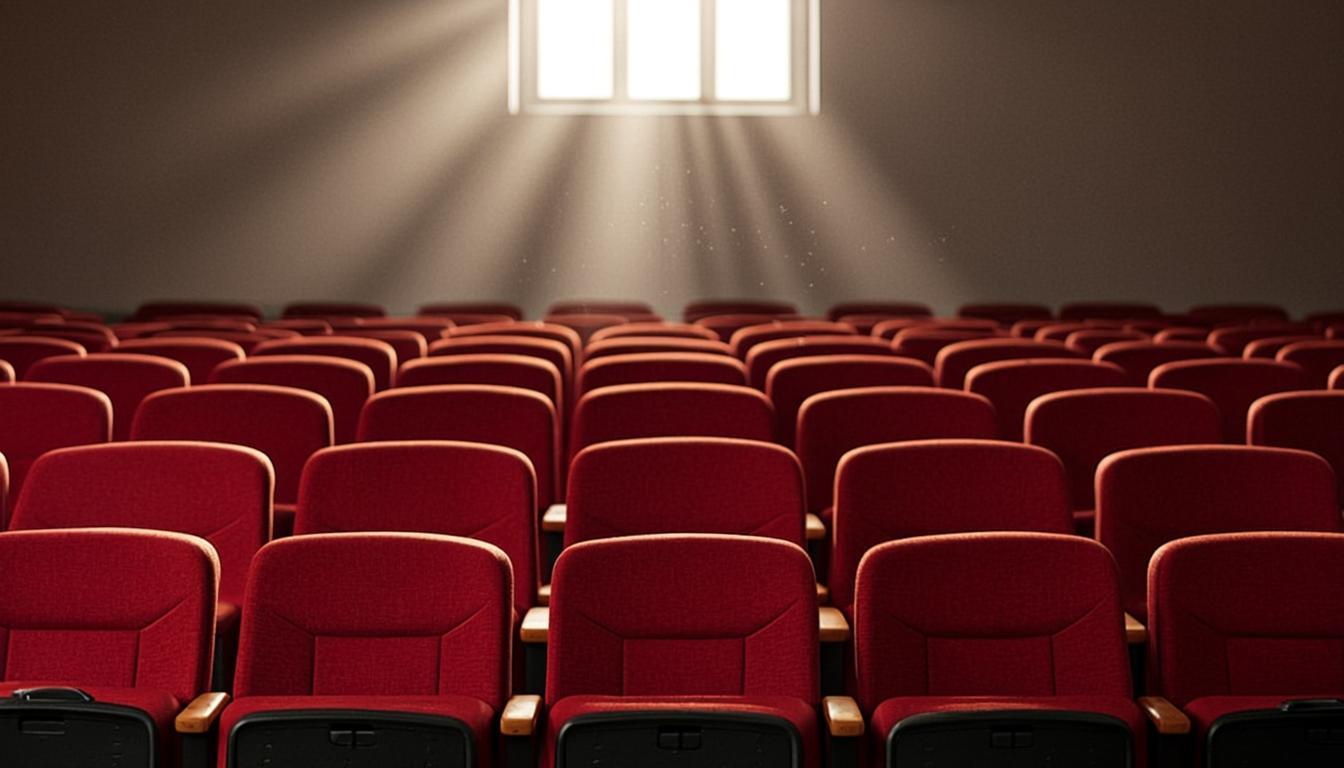
In a culture that rewards volume — louder opinions, bigger spectacles, more content — the deliberate choice to be quiet is a radical act. For filmmakers, silence isn't an absence. It's a tool, a statement, and sometimes the most honest thing you can offer an audience.
The loudest culture in history
We live in the noisiest moment in human history. Not in terms of decibels, necessarily, but in terms of demands on our attention. Every screen competes for every second. Every platform optimizes for engagement, which is a polite word for compulsion. The default assumption of modern media is that if you're not shouting, you're not worth hearing. This creates a vicious cycle: as the volume increases, individual voices must get louder still to be noticed, which raises the floor again, which requires even more volume, ad infinitum. For filmmakers working within this ecosystem, the pressure to amplify is relentless. Make it bigger. Make it faster. Add more spectacle, more drama, more everything. The implicit message is that subtlety is a liability — that if you trust your audience to pay attention without being grabbed by the collar, you'll lose them.
What silence actually does
But consider what happens in the spaces between words, between cuts, between notes. Silence creates room — room for the viewer to project their own experience, to feel rather than be told what to feel, to discover meaning rather than receive it. The best filmmakers have always understood this. Ozu held his shots long after the action ended, allowing the audience to sit with the emotional residue of a scene. Tarkovsky used time as a sculptural material, letting moments breathe until they became almost unbearable in their intensity. Bergman's close-ups existed in a kind of suspended silence that said more about the human condition than any monologue could. These directors weren't being obtuse or self-indulgent. They understood that the most profound human experiences — grief, love, wonder, loss — resist articulation. They exist in a territory beyond language, and to approach them honestly, you sometimes have to stop trying to explain and simply be present.
"Silence in cinema isn't emptiness. It's an invitation — a space where the audience becomes a participant rather than a consumer."
Practical restraint
How does this philosophy translate to practice? For us, it begins in the writing: leaving things unsaid, trusting actions to speak, cutting exposition that the camera can convey. On set, it means allowing scenes to breathe — rolling before the action starts and after it ends, capturing the moments of hesitation and reflection that most productions discard. In the edit, it means resisting the urge to cut on every beat, using duration as a narrative tool, and trusting that a held shot can accumulate emotional weight that a rapid montage never could. Sound design is perhaps the most important arena of all. The choice to remove music from a scene, to let ambient sound carry the emotional load, to let a character's breathing communicate what dialogue would cheapen — these are the decisions that separate films that respect their audience from films that manipulate them.
A quiet provocation
Choosing silence in 2024 is not a retreat. It's a provocation. It's a refusal to accept the premise that attention must be demanded rather than earned. It's a bet on the intelligence and emotional capacity of the viewer. And paradoxically, in a landscape of constant noise, it's the quietest films that often make the deepest impression — not because they're novel, but because they create the space that audiences are starving for. The silence that precedes a line of dialogue, the pause before a character makes a decision, the held shot that lets a landscape speak — these aren't voids. They're where the real cinema lives.